






Zapotec
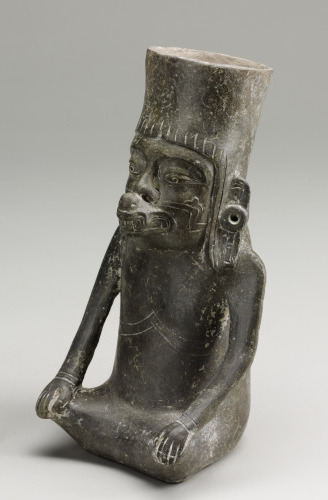
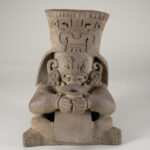
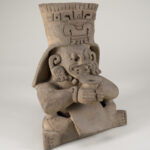
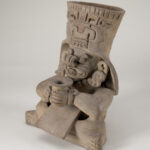
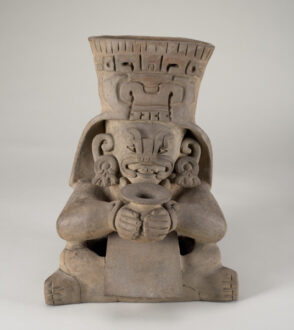
Burial Vessel in the Form of the Rain God Cocijo
Zapotec, 600-900
Physical Qualities
Earthenware, 16 1/4 in. (41.3 cm.) H
Credit Line
Gift of Alan Wurtzburger
Object Number
1960.30.26
Deities of rain and agriculture are found in many Mesoamerican religions. These divine beings were believed to help cultures flourish in challenging climates like those found in areas of Central and Southern Mexico.
The Zapotec, who thrived in Oaxaca from around 500 BCE to 900 CE, created this burial vessel that takes the form of the rain god Cocijo. By providing much-needed rain, Cocijo made possible an agricultural cycle of renewal and growth. His presence in a burial cache alludes to the cyclical nature of life itself, as the death of the body ushered in a new phase of consciousness.
BMA by gift, 1960; Alan Wurtzburger, Baltimore; Charles Ratton, Paris
Darienne Turner, Baltimore Museum of Art, Ancient Americas Gallery Rotations, December 12, 2021.
The Wurtzburger Collection of Pre-Columbian Art, Baltimore: The Baltimore Museum of Art, 1958, p. 24, no. 26, ill. p. 43.
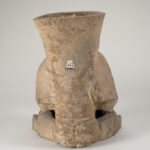
Inscribed: 2 stickers on the back: "Ratton Paris," which indicates the seller was likely Charles Ratton, and "551" is a sticker that the Wurtzburger family put on themselves. There is also illegible cursive handwriting, likely executed in pencil, on the interior back edge of the bowl the figure is holding.


 On View at the BMA