

Jingdezhen kilns
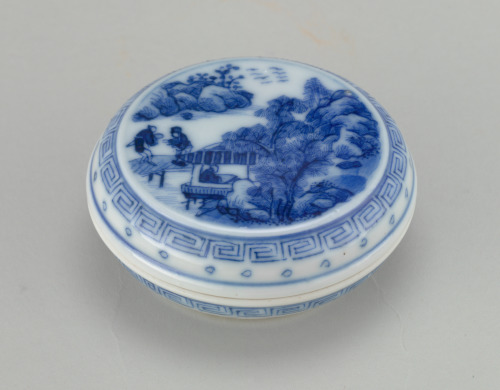
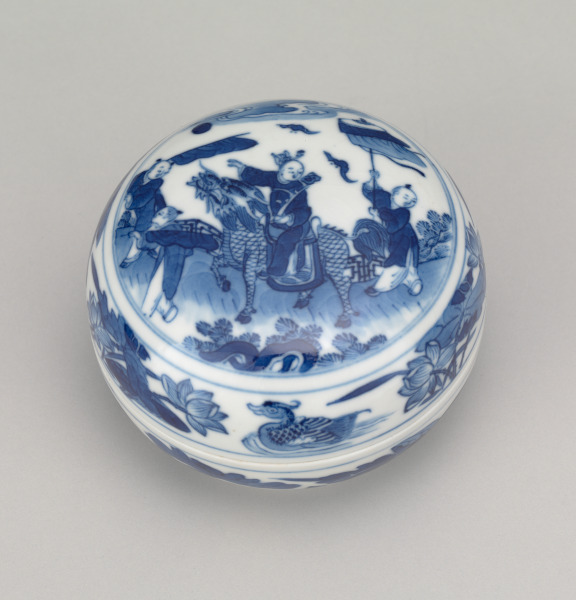
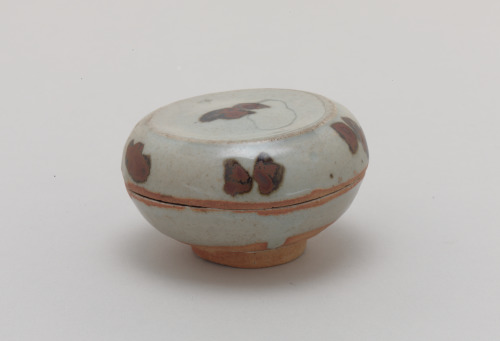
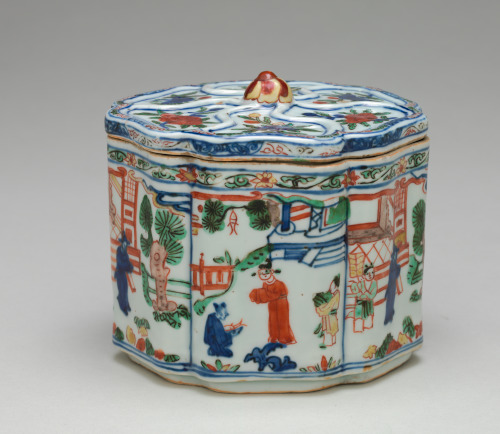
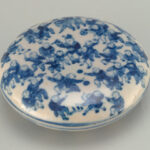
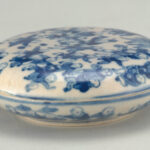
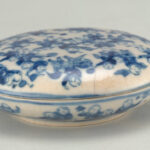
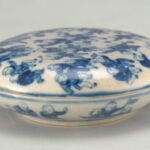
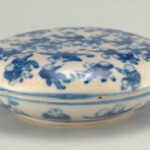
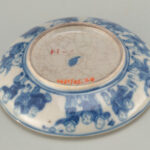
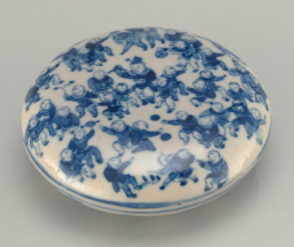
Covered Seal Paste Box Decorated with “100 Boys” Motif
1700-1799
Scroll

Jingdezhen kilns
Covered Seal Paste Box Decorated with “100 Boys” Motif
1700-1799
Physical Qualities
'Slippery stone' (huashi) porcelain with underglaze cobalt decoration, 2.5 H x 7.9 cm. Diam. (1 x 3 1/8 in.)
Credit Line
The Cone Collection, formed by Dr. Claribel Cone and Miss Etta Cone of Baltimore, Maryland
Object Number
1950.1985.2
Seal paste was made from finely pulverized red cinnabar or carbon black, blended with castor oil and silk strands to bind the mixture together. Alternatively, leaves and stems of the artemisia plant could be ground into a fluff and then burned. The residual plant matter would replace silk for a spongier, less oily paste
The Baltimore Museum of Art by bequest, 1949; Etta Cone, Baltimore; Claribel or Etta Cone; probably purchased in China or Japan in 1907 on Cone Family trip