




Igbo
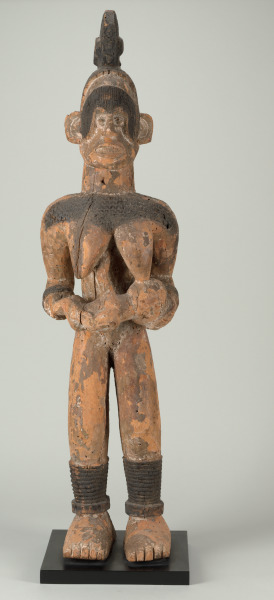
Female Shrine Figure (Alusi)
Igbo, 1800-1899
Scroll

Igbo
Female Shrine Figure (Alusi)
Igbo, 1800-1899
Physical Qualities
Wood, kaolin, camwood, 48 5/8 x 10 7/16 x 7 7/8 in. (123.5 x 26.5 x 20 cm.)
Credit Line
Gift of Dr. and Mrs. Bernard Berk
Object Number
1973.77
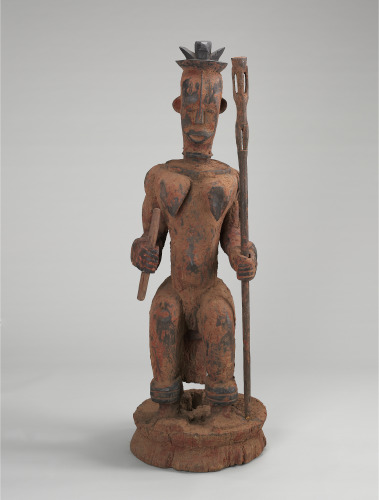
Solid and stylized male and female figures, called alusi, represent Igbo familial and communal deities and ancestors. To honor these divinities, artists carved figures with the attributes denoting the finest human accomplishment: male figures are patterned with the ichi marks of a titleholder, while female figures are adorned with elaborate hairstyles, jewelry such as ringed brass anklets, and body markings. The markings on this 19th-century female figure have faded over time, but close inspection of the torso reveals a vertical arrangement of delicately carved curvilinear designs. These faint marks may well refer to mbubu—scarification patterns chosen by some women to beautify their bodies and proclaim their maturity and respectability.
Karen Milbourne, BMA, "Meditations on African Art: PATTERN," March 12-August 17, 2008
Thompson, Barbara, ed., "Black Womanhood: Images, Icons, and Ideologies of the African Body," Dartmouth and Seattle: The Hood Museum of Art in association with University of Washington Press, 2008, p. 56, fig. 2.6, illus.