




Unidentified, probably American
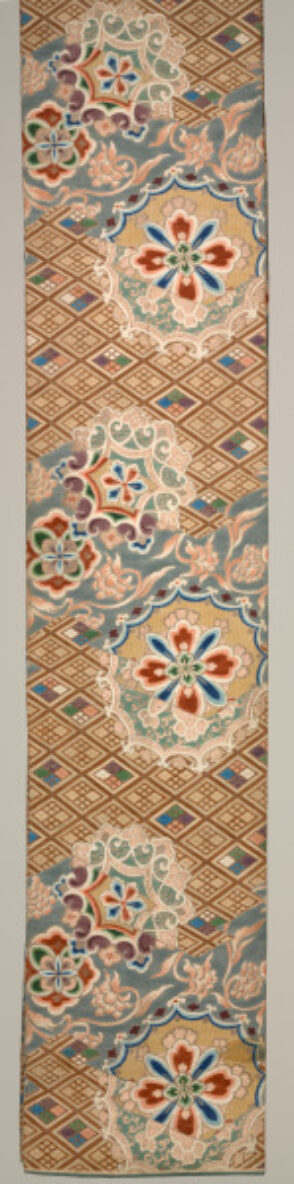
Formal Sash (maru obi)
1899-1925
Physical Qualities
Silk with supplementary wefts of silk, metal-leafed paper strips, and metal-leafed paper strips wrapped around a silk or cotton thread core
, 160 x 12-1/2 in. (406.6 x 31.8 cm.)
Credit Line
Gift of Clara Jane Shaull, Monkton, Maryland, from the Collection of Robert S. Shaull
Object Number
1990.295
The nested diamonds filling the background of this obi
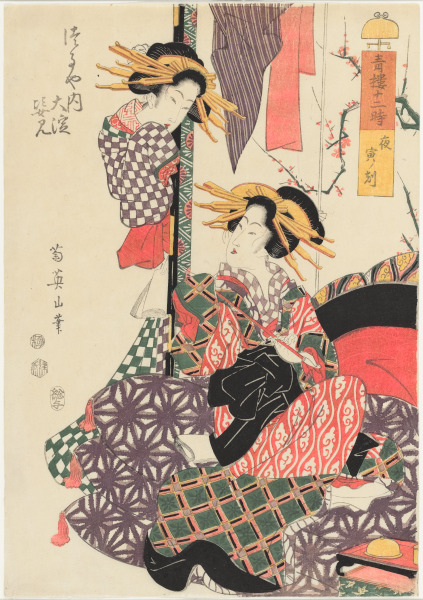
(sash) symbolize prosperity. This type of colorful fabric provided the name for the fully colored woodcut prints of courtesans introduced in the 1760s: nishiki-e (literally, brocade pictures). In the early 1800s, geisha also became frequent subjects for nishiki-e. These popular prints featured the latest fashions, showing women how to tie a sash or style their hair.
Frances Klapthor, The Art of Pattern: Henri Matisse and Japanese Woodcut Artists, Fisher Gallery, June 2024-January 2025
The Baltimore Museum of Art by gift 1990, Clara Jane Shaull, ex. collection Robert S. Shaull, (husband) by purchase in Manchuria.
Anita Jones and Ann Marie Moeller, The Baltimore Museum of Art, Baltimore, MD, "Kimono and Obi: Romantic Echoes from Japan's Golden Age," July 10, 2016 - January 15, 2017.
Katherine Rothkopf and Frances Klapthor, The Art of Pattern: Henri Matisse and Japanese Woodcut Artists, The Baltimore Museum of Art, June 2, 2024-Jan. 5, 2025
Katherine Rothkopf and Frances Klapthor, The Art of Pattern: Henri Matisse and Japanese Woodcut Artists, The Baltimore Museum of Art, June 2, 2024-Jan. 5, 2025
Inscribed: None.
Artist Japanese Artists
Unidentified, probably American
2000-01-01 00:00:00–2000-01-01 00:00:00