





Nayarit
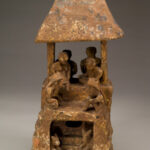
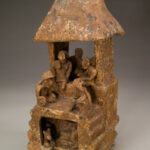
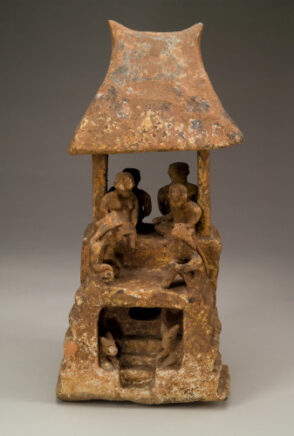
House Model
Nayarit, 2001
Physical Qualities
Ceramic, 11 x 5 1/2 x 5 1/8 in. (28 x 14 x 13 cm.)
Credit Line
Gift of Alan Wurtzburger
Object Number
1960.30.19
In ancient cultures of West Mexico, ancestor worship connected the living with the dead and reinforced social status. Elite kinship groups participated in intricate burial practices in which the dead were placed in shaft tombs along with offerings of ceramics, jewelry, luxury trade goods, and meals for the journey to the afterlife.
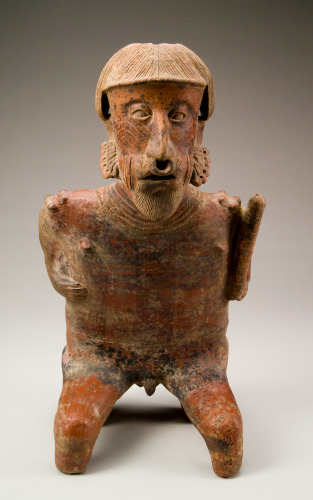
Both the Zacatecas figure and the Nayarit chief figure were likely found in tombs and depict men of authority. The Nayarit figure may represent a warrior chief, whose seated position on a stool shows his rank. The Zacatecas figure wears a complex hairstyle, an extravagant textile, and earspools. His open mouth with pursed lips suggests that he is chanting or singing at a social or ritual event.
As the Nayarit and Zacatecas people left no written histories, ceramics like these are vital records of their lifeways and funerary practices. The house model, for instance, alludes to traditional burial practices with its form—the Nayarit typically lived in one-story buildings and buried family members beneath the house, so the lower level of the structure likely represents a tomb or the underworld itself.
Group label for 1960.30.19, 1960.30.20, and 2006.120.
Darienne Turner, Baltimore Museum of Art, Ancient Americas Gallery Rotations, December 12, 2021.
Baltimore Museum of Art. The Alan Wurtzburger Collection of Pre-Columbian Art. Baltimore, MD: Baltimore Museum of Art, 1958, no. 19, page 18.
Hovaguimian, Vroni, "Images and Words," North Charleston, SC: CreateSpace Independent Publishing Platform, 2015.


 On View at the BMA
Explore the Collection Further