






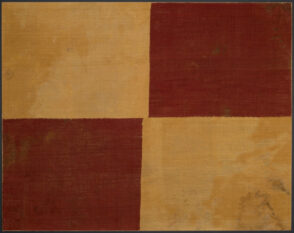
Nasca
Mantle
Nasca, 100-650
Physical Qualities
Camelid fiber, 52 15/16 × 68 1/8 in. (134.5 × 173 cm.)
Credit Line
Gift of Robert and Debra Gordon, New York
Object Number
2005.28
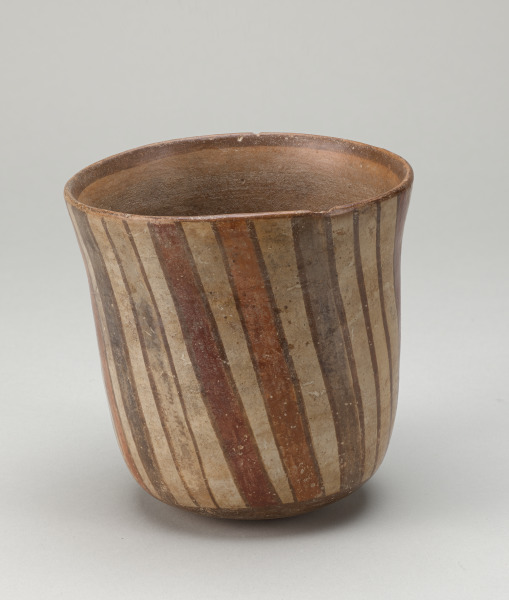
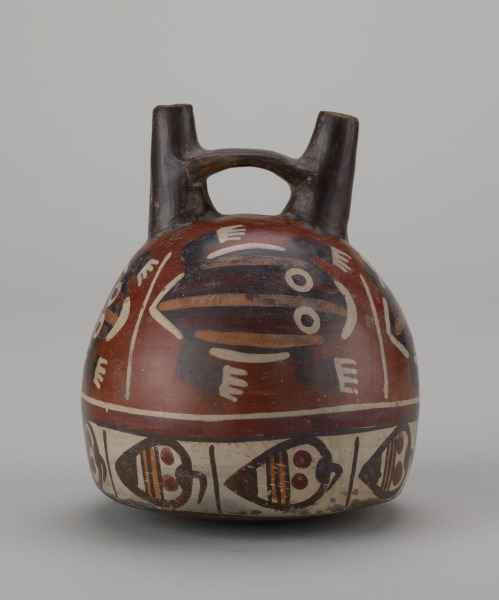
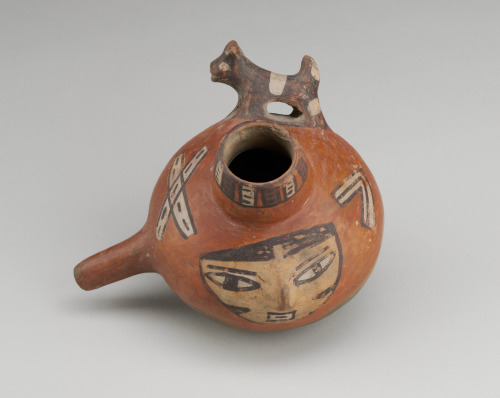
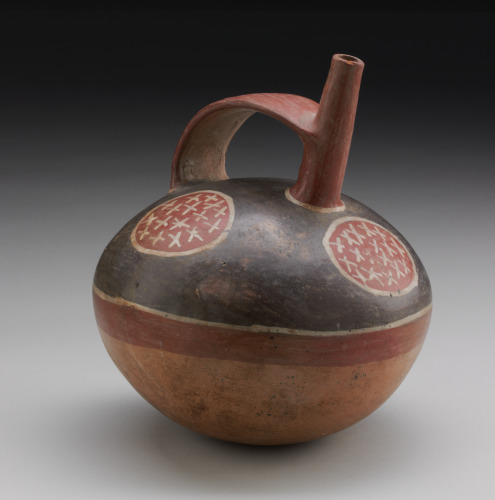
Nazca (A.D. 1-600) describes an art style of south coastal Peru known for its polychrome ceramics and the brilliant hues of its cloth. Reds and yellows predominate the palette during the late-Nazca period. Reds were produced from the Relbunium plant or from cochineal (the insect coccus cacti). Yellows were derived from a number of plants.
Stylized figural designs and geometrical patterns are principle to the designs of tunics, belts, headbands, mantles and cloaks. Textiles woven in a plain weave in which the warps and wefts are discontinuous are of particular note. The technique was utilized throughout the Nazca tradition (Rowe 1977:31).
The Baltimore Museum of Art by gift, 2005; Collection of Robert and Debbie Gordon, New York, since 1992. Formerly of Gail Martin Galleries, NY.