

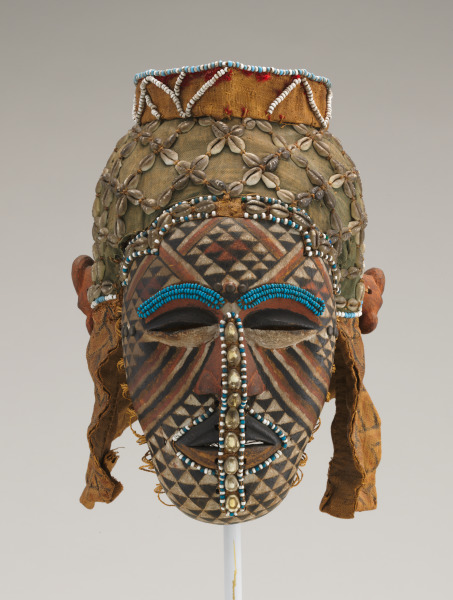


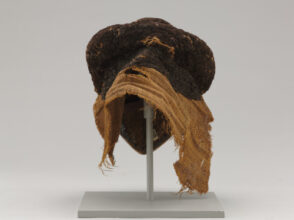
Pende
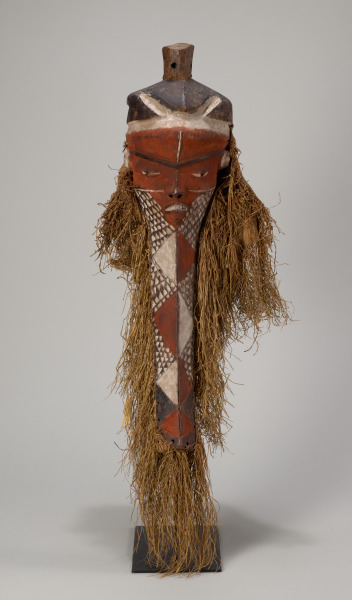
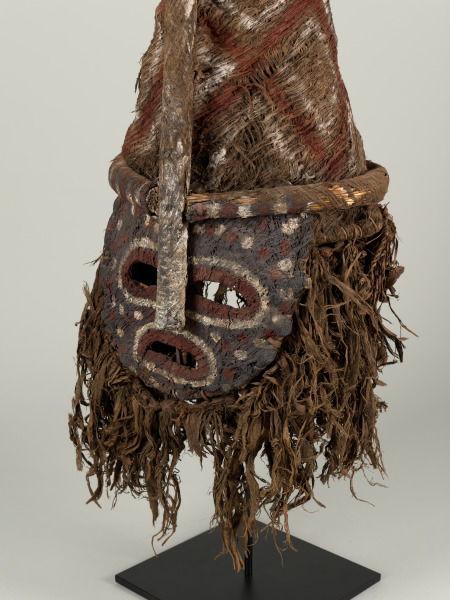
Mask (Mbuya)
Pende, 1899-1919
Physical Qualities
Wood, plant fibers, cloth, pigment, 8 11/16 x 5 1/2 x 11 in. (22 x 14 x 28 cm.)
Credit Line
Gift of Alan Wurtzburger
Object Number
1954.145.73
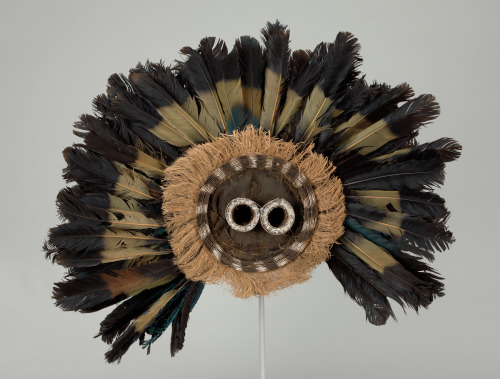
In Pende communities, wooden masks like this one were created and danced for entertainment purposes. This particular mask is associated with two long-standing, athletically demanding types of masquerades: Ginjinga and Pota. In Ginjinga and Pota, the young male dancer was expected to execute fast-paced alternating footwork on his toes. These aerobic outbursts never failed to delight audience members and led one Pende elder, Muhenge Mutala, to say that the masquerade was capable of "making rejoice the bodies that are shivering."
'The Wurtzburger Collection of African Sculpture,' Jan. 12-Feb. 14, 1954, BMA, cat. 73.
'Wurtzburger Collection,' June 21-Aug. 31, 1954, Washington DC, School of Advanced Studies, Johns Hopkins University.
'African Sculpture,' Oct. 8-Nov. 7, 1954, Rochester, The Memorial Art Gallery.
"Meditations on African Art: Color," April 18, 2007-August 19, 2007, BMA, Karen Milbourne.
African Reinstallation, "Public Art," April 2015, Wurtzburger Galleries, BMA, Kathryn Gunsch.
'Wurtzburger Collection,' June 21-Aug. 31, 1954, Washington DC, School of Advanced Studies, Johns Hopkins University.
'African Sculpture,' Oct. 8-Nov. 7, 1954, Rochester, The Memorial Art Gallery.
"Meditations on African Art: Color," April 18, 2007-August 19, 2007, BMA, Karen Milbourne.
African Reinstallation, "Public Art," April 2015, Wurtzburger Galleries, BMA, Kathryn Gunsch.
Frederick John Lamp, "See the Music Hear the Dance: Rethinking African Art at the Baltimore Museum of Art." New York: Prestel, 2003, p.88, ill.
Baltimore Museum of Art. "The Baltimore Museum of Art: Celebrating a Museum." Baltimore: The Baltimore Museum of Art, 2014.


 On View at the BMA