





Kongo
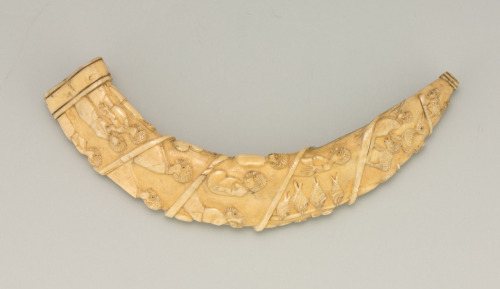
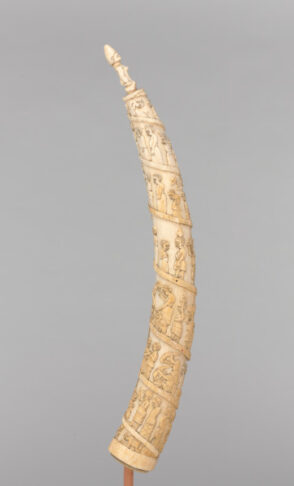
Tusk Carved in Relief
Kongo (Vili group), 1866-1932

Scroll

Kongo
Tusk Carved in Relief
Kongo (Vili group), 1866-1932
Physical Qualities
African elephant ivory, 21 1/4 x 2 3/8 x 1 3/16 in. (54 x 6 x 3 cm.)
Credit Line
Gift of Alan Wurtzburger
Object Number
1953.133a
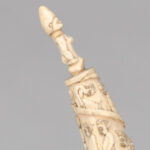
Look closely at this carved elephant tusk decorated with spiraling scenes of everyday life on the Loango Coast of west central Africa. Near the base, African workers carry tusks harvested from slaughtered elephants. The spiral motif not only guides the narrative around the tusk but also echoes a metaphorical connection between the worlds of the living and dead, central in Kongo belief systems.
From the 1850s to around 1910, skilled sculptors on the Atlantic coast of the Kongo Kingdom carved souvenir tusks like this one for European traders and officials. More than a thousand similar tusks were sold at the peak of the exploitative elephant ivory trade.
African Reinstallation, "The Artist," Apr 2015, Wurtzburger Galleries, Kathryn Gunsch.
Baltimore Museum of Art. "The Baltimore Museum of Art: Celebrating a Museum." Baltimore: The Baltimore Museum of Art, 2014.


Explore the Collection Further