
Man Ray
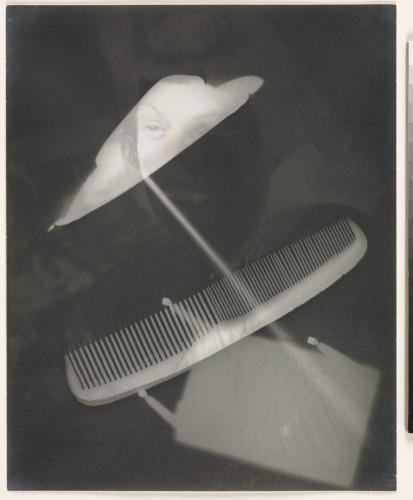
Untitled
1923
Scroll

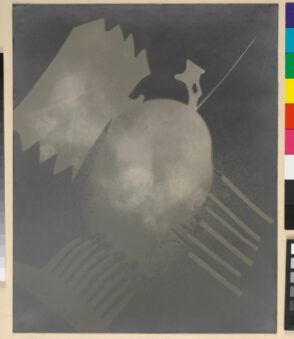
Man Ray
Untitled
1923
Physical Qualities
Gelatin silver print (photogram), Sheet: 295 x 237 mm. (11 5/8 x 9 5/16 in.)
Credit Line
Purchase with exchange funds from the Edward Joseph Gallagher III Memorial Collection; and partial gift of George H. Dalsheimer, Baltimore
Object Number
1988.429
A photogram (or what Man Ray called a “rayograph”) is a unique photograph made without a camera. In creating his photograms, Man Ray placed various ordinary objects—and sometimes body parts—onto photosensitive paper and then exposed them to light. The areas of paper exposed to the light become darker, whereas the areas covered by objects remain light. Depending on the shape and transparency of the objects used, the resulting unpredictable compositions of silhouettes ranged from mysterious to humorous in their effects, and often evoked the appearance of an x-ray.
BMA, Cone Wing rotation (Sarah Oppenheimer), 14 November 2012 - 3 June 2013.
Rena Hoisington, BMA, "Looking through the Lens: Photography 1900-1960," 16 March - 8 June 2008.
Darsie Alexander, BMA, "Parallel Tracks," Nov. 27, 2002-May 25, 2003.
Jan Howard, BMA, "Abstract Photographs," 22 March - 25 June 1995.
Jan Howard, BMA, "The Collector's Eye: Photographs from the Museum's Dalsheimer Collection," 17 September - 19 November, 1989.
Rena Hoisington, BMA, "Looking through the Lens: Photography 1900-1960," 16 March - 8 June 2008.
Darsie Alexander, BMA, "Parallel Tracks," Nov. 27, 2002-May 25, 2003.
Jan Howard, BMA, "Abstract Photographs," 22 March - 25 June 1995.
Jan Howard, BMA, "The Collector's Eye: Photographs from the Museum's Dalsheimer Collection," 17 September - 19 November, 1989.
"The Baltimore Museum of Art: Celebrating a Museum," The Baltimore Museum of Art, 2014, p. 199.
Inscribed: Recto: on mount, in graphite, at lower right: "Man Ray / 1924"; on mount, in graphite, at upper left: "58 / 28 35 / 43 51"; Verso: on mount, in graphite, at top: "58 #"