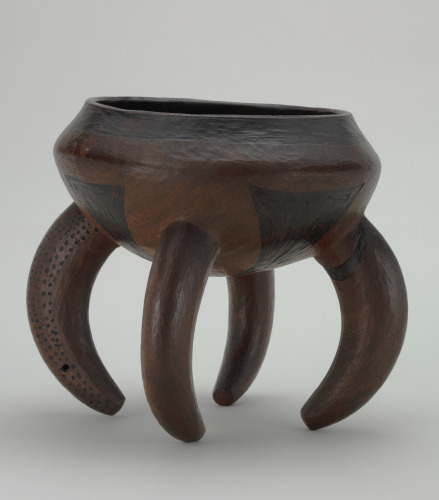






Maasai
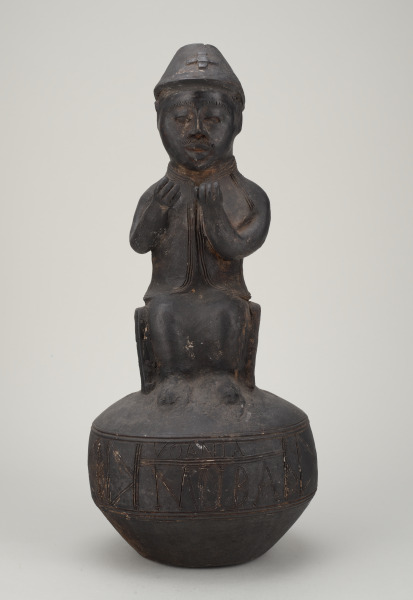
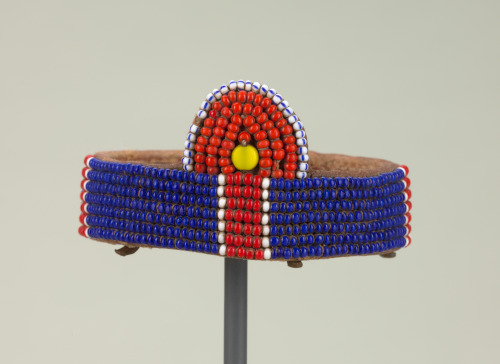
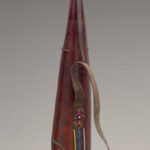
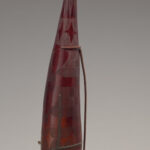
Vessel (Enkukuri)
Maasai (Northern), 1933-1966
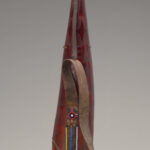
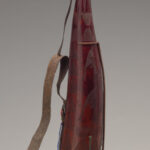
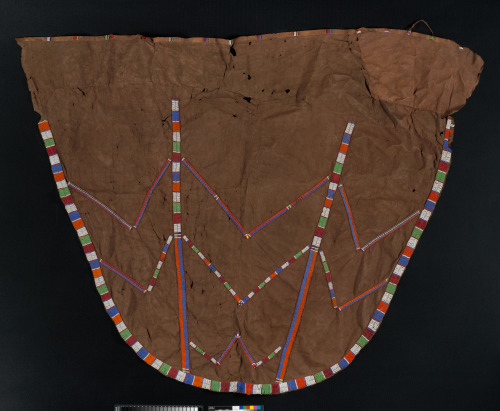
Scroll

Maasai
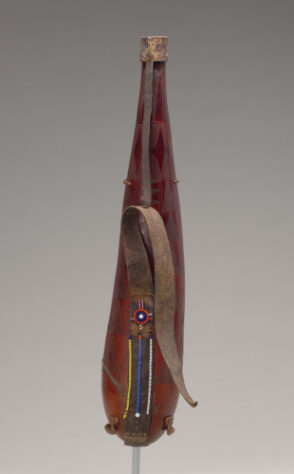
Vessel (Enkukuri)
Maasai (Northern), 1933-1966
Physical Qualities
Gourd, hide, glass beads, iron alloy, 24 13/16 x 5 1/2 x 5 1/2 in. (63 x 14 x 14 cm.)
Credit Line
Gift of Nancy and Robert H. Nooter, Washington, D.C.
Object Number
1994.267
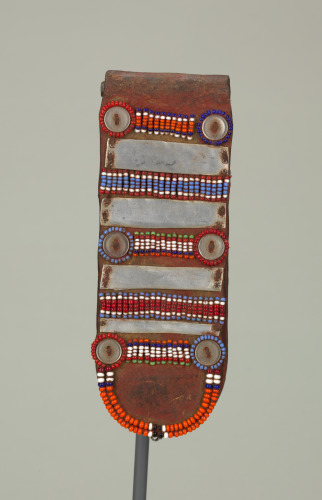
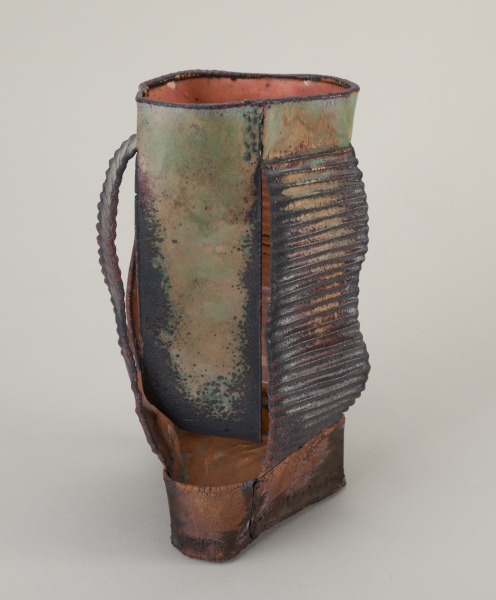
In colonial Kenya (1880-1963), you could tell a person's ethnicity based on the jewelry they wore. Turkana women, for instance, favored bands of single-color beads, while Maasai beaders preferred intricate, geometric patterns made from a diverse array of colors. However, a history of colonial oppression lies beneath the surface of these colorful distinctions. Separated by British colonizers into ethnically segregated "native reserves", the women who created these works lost the opportunity for artistic exchange. As colonialism wore on, their designs became more and more ethnically specific.
Nichole Bridges, The Baltimore Museum of Art, "Hand Held: Personal Arts from Africa," Sept. 25, 2011-Feb. 5, 2012.
Kevin Tervala and Shannen Hill, The Baltimore Museum of ARt, "Design for Mobile Living: Art from Eastern Africa," June 1-Nov 27, 2016.
Kevin Tervala and Shannen Hill, The Baltimore Museum of ARt, "Design for Mobile Living: Art from Eastern Africa," June 1-Nov 27, 2016.


 On View at the BMA