



BMA Presents Seeing the Essential: The Sigmund M. and Mary B. Hyman Collection of American Art
The Baltimore philanthropists’ collection focuses on artistic representations of everyday life
BALTIMORE, MD (April 14, 2026)—The Baltimore Museum of Art (BMA) presents Seeing the Essential: The Sigmund M. and Mary B. Hyman Collection of American Art, an expansive exhibition showcasing more than 100 works from the collection of Baltimore philanthropists Sigmund M. Hyman (1921–2002) and Mary B. Hyman (1927–2024). Over more than 60 years, they built an art collection guided by an interest in modern American culture and history, visual beauty, their own personal tastes, and an appreciation for artists who depicted everyday life with honesty and imagination. On view from May 10 through September 13, 2026, the exhibition celebrates the Hymans’ gift to the BMA as well as their six‑decade commitment to American art, civic engagement, and public access to culture.
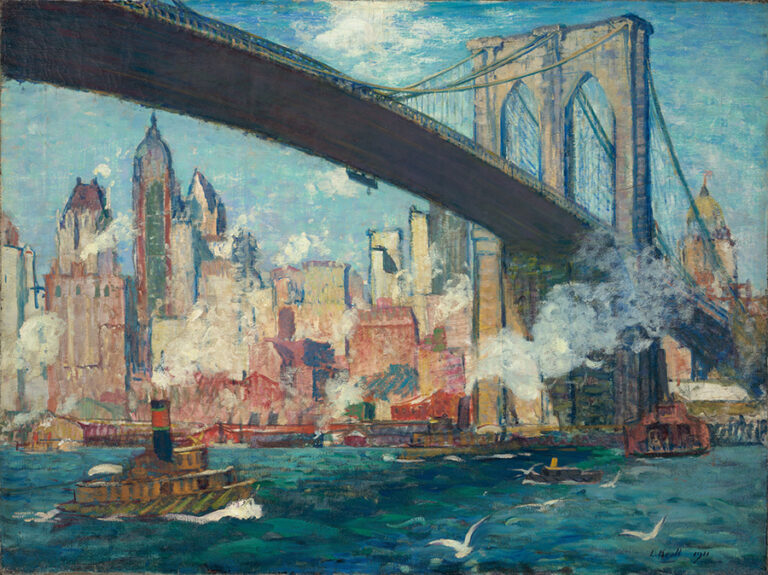
The title Seeing the Essential draws inspiration from Ashcan artist and educator Robert Henri, who wrote in 1923 that the ability “to see and to remember the essential” was fundamental to artistic purpose. Living with these works in their home, the Hymans embraced this philosophy, finding beauty, humor, and meaning in art that reflected lived experience. Built from the 1960s through the early 2020s, the Hyman Collection centers on American modernist artists, with particular strength in works associated with the Ashcan School. United by a shared interest in representing everyday life, these artists turned their attention to city streets, domestic interiors, working people, performers, and the changing urban landscape. Their works offer vivid, often empathetic views of American life during a period of rapid social and industrial transformation. The exhibition is organized around similar themes that illuminate how modern artists sought meaning in ordinary moments and familiar spaces.
Among the exhibition’s highlights are more than 20 works by John Sloan, a leading Ashcan School artist and former newspaper illustrator whose masterful compositions reveal both the spectacle and social complexity of urban life. Other standout works include Guy Wiggins’s large‑scale Impressionist streetscape of New York City, Midtown Looking Down Fifth Avenue (mid‑20th century); John Singer Sargent’s striking charcoal portrait Miss Enid Morse (1911); and Provincetown (1916), Marguerite Zorach’s bold Cubist interpretation of the Massachusetts harbor rendered in prismatic color and dynamic form. The exhibition also reflects the transnational and multi-cultural dimensions of American modernism, featuring works by Native American, immigrant, and European artists whose perspectives shaped—and challenged—dominant narratives of American art.
“Sig and Mary Hyman collected with an astute curiosity, an abiding belief in the power of history, and a sense of conviction,” said Asma Naeem, the BMA’s Dorothy Wagner Wallis Director. “The BMA is fortunate to have a significant portion of their collection, ensuring that these works and the stories they tell are accessible to the public. We are very grateful for their generosity as it reflects a deep belief in the power of artists to illuminate everyday life.”
Seeing the Essential: The Sigmund M. and Mary B. Hyman Collection of American Art is co‑curated by Virginia M.G. Anderson, BMA Senior Curator of American Art and Department Head, American Painting & Sculpture and Decorative Arts, and Robin Owen Joyce, BMA Assistant Curator of Academic Engagement.
This exhibition is supported by the Sigmund M. and Mary B. Hyman Fund for American Art.

About Sigmund M. and Mary B. Hyman
Sigmund M. Hyman (1921–2002) and Mary B. Hyman (1927–2024) were longtime Baltimore residents whose lives were marked by deep civic commitment, intellectual curiosity, and a shared belief in public access to education and the arts. A Baltimore native and Purple Heart–decorated World War II veteran, Sigmund Hyman was a pioneering pension expert who created the first pension plans for the National Football League. Mary Hyman, who grew up in Cape Cod, Massachusetts, and later made Baltimore her home, was a science administrator at Loyola University Maryland and a passionate advocate for education and lifelong learning. Their philanthropy supported a wide range of cultural, educational, and scientific institutions, including the BMA, and reflected their enduring commitment to making knowledge and creativity accessible to broad audiences.
About the Baltimore Museum of Art
Founded in 1914, the Baltimore Museum of Art (BMA) inspires people of all ages and backgrounds through exhibitions, programs, and collections that tell an expansive story of art—challenging long-held narratives and embracing new voices. Our outstanding collection of more than 97,000 objects spans many eras and cultures and includes the world’s largest public holding of works by Henri Matisse; one of the nation’s finest collections of prints, drawings, and photographs; and a rapidly growing number of works by contemporary artists of diverse backgrounds. The museum is also distinguished by a neoclassical building designed by American architect John Russell Pope and two beautifully landscaped gardens featuring an array of modern and contemporary sculpture. The BMA is located three miles north of the Inner Harbor, adjacent to the main campus of Johns Hopkins University, and has a community branch at Lexington Market. General admission is free so that everyone can enjoy the power of art.


Press Contacts
For media in Baltimore:
Anne Brown
Baltimore Museum of Art
Senior Director of Communications
abrown@artbma.org
410-274-9907
Sarah Pedroni
Baltimore Museum of Art
Communications Manager
spedroni@artbma.org
410-428-4668
For media outside Baltimore:
Alina Sumajin
PAVE Communications
alina@paveconsult.com
646-369-2050