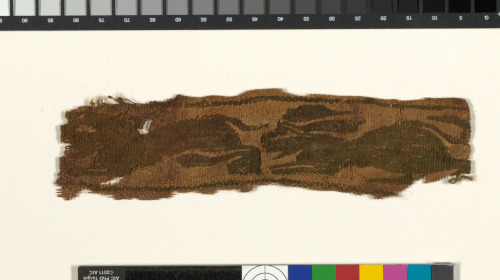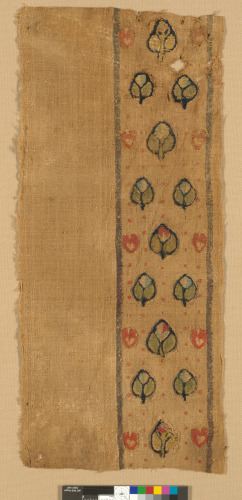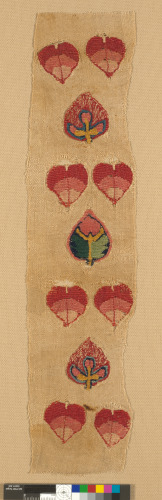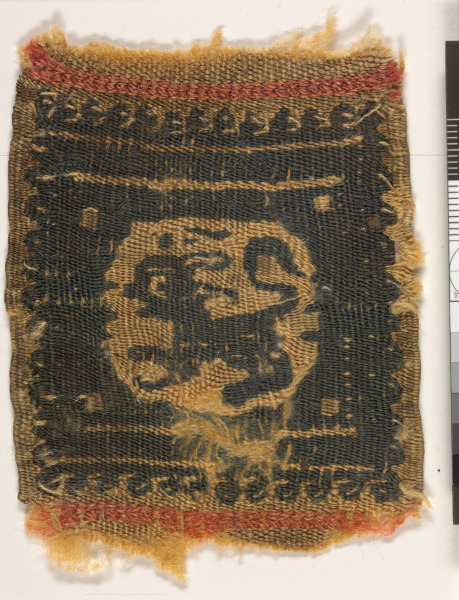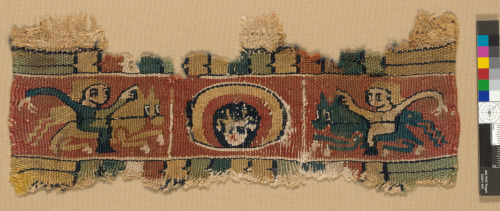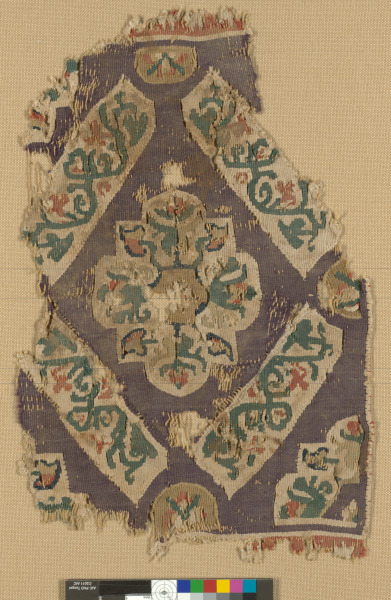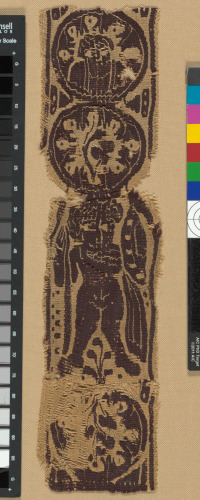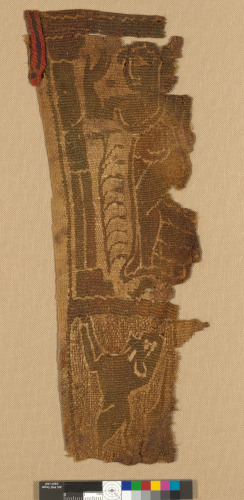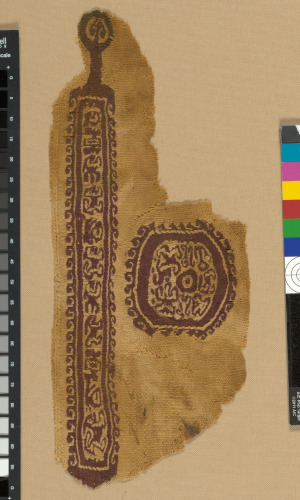






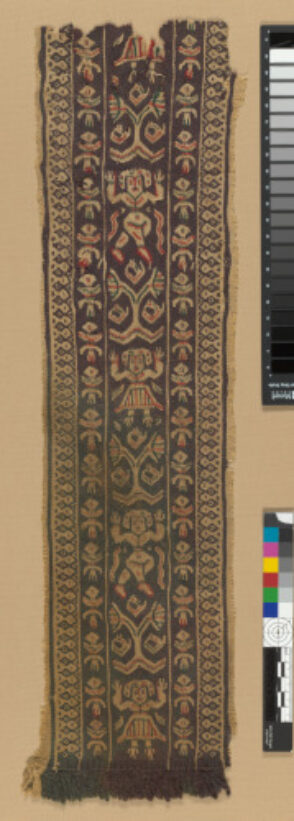
Fragment of Decorative Band or Clavus with Dancing Figures and Fringe
600-1198
Physical Qualities
Wool, 20-1/2 x 5-1/2 in. (52.1 x 14 cm.)
Credit Line
The Cone Collection, formed by Dr. Claribel Cone and Miss Etta Cone of Baltimore, Maryland
Object Number
1950.1994.1
This long narrow tapestry-woven band is probably the lower portion of a clavus from a tunic. The weft threads create a fringe on the lower edge which is probably the lower hem of the garment. The inner stripe features stylized dancers woven in natural colored wefts with green and red floating wefts creating colorful accents on a purple ground. The dancers have large heads with elaborate headdresses or coiffures. They are arranged in a single column with upraised arms, some with crossed legs. The dancers alternate with a plant or floral design and are flanked by colorful fish motifs. These designs may represent Dionysian celebrations of the fruits of the land and sea comingled with Egyptian celebrations of the Nile’s bounty. The two outer stripes feature very complex ornamental border patterns.
The Baltimore Museum of Art by gift, 1950; Etta Cone.
Anita Jones, The Baltimore Museum of Art, Timeless Weft: Ancient Tapestries and the Art of Louise B. Wheatley, February 1–July 30, 2017.