





Coptic
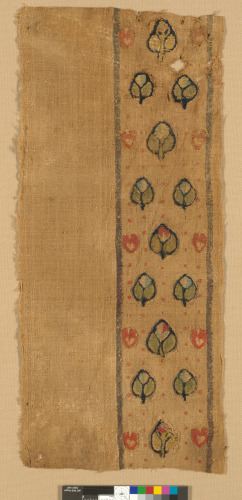
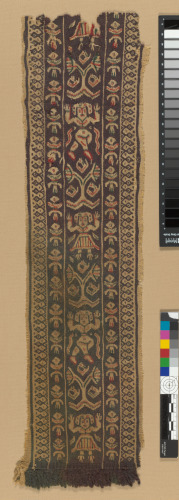
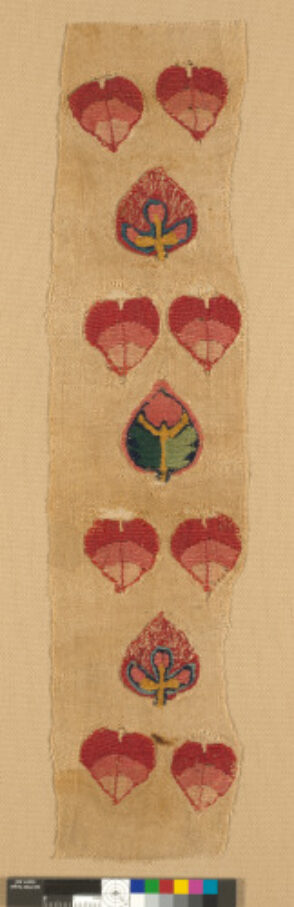
Fragment of Decorative Band or Clavus with Floral Designs
Coptic, 301-800
Scroll

Coptic
Fragment of Decorative Band or Clavus with Floral Designs
Coptic, 301-800
Physical Qualities
Linen, wool, 11-1/4 x 2-3/4 in.
Credit Line
Gift of Dena S. Katzenberg, Baltimore
Object Number
1985.236
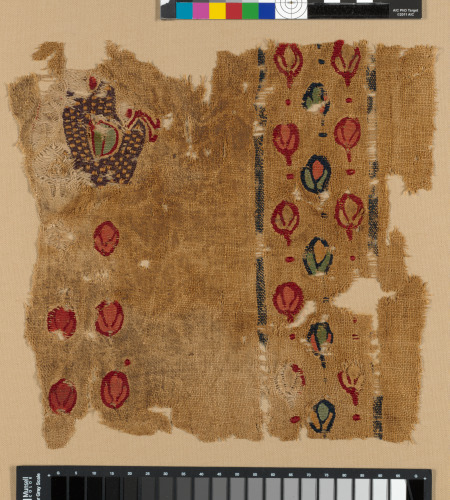
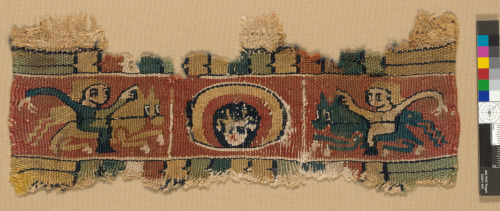
In this fragment, as in many other Coptic examples, decoration consisted of tapestry woven motifs worked in colored wools into a linen ground. Many of these motifs were based upon vegetation, vines, leaves, flowers, and fruit. The small heart-shaped red, rose, and pink lozenges in this fragment are generally interpreted as roses and they appear in mosaic work as well as in textiles. Similar multicolored designs oriented in the opposite direction may represent blossoms, leaves, or even trees. It is likely that this fragment was originally bound within two woven lines on its long sides and probably served as a part of an ornamental strip called a clavus. Astonishingly, the colored yarns of polychrome Coptic textiles remain incredibly vibrant after many centuries. Natural dyestuffs available to ancient dyers included plant based dyes such as red from madder, blue from indigo leaves, yellow from the weld and saffron plants. Red was also obtained from kermes (the dried bodies of insects). A more expensive dye from the glands of a shellfish, murex purpureus, produced a deep purple.
Baltimore Museum of Art by gift 1985; Dena S. Katzenberg, Baltimore, MD.
Anita Jones, The Baltimore Museum of Art, "Timeless Weft: Ancient Tapestries and the Art of Louise B. Wheatley", February 1–July 30, 2017.
Anita Jones, Matisse-Designed Textiles, Baltimore Museum of Art, rotation in Berman Gallery, December 13, 2007-June 23, 2008, no catalog.
Anita Jones, Matisse-Designed Textiles, Baltimore Museum of Art, rotation in Berman Gallery, December 13, 2007-June 23, 2008, no catalog.