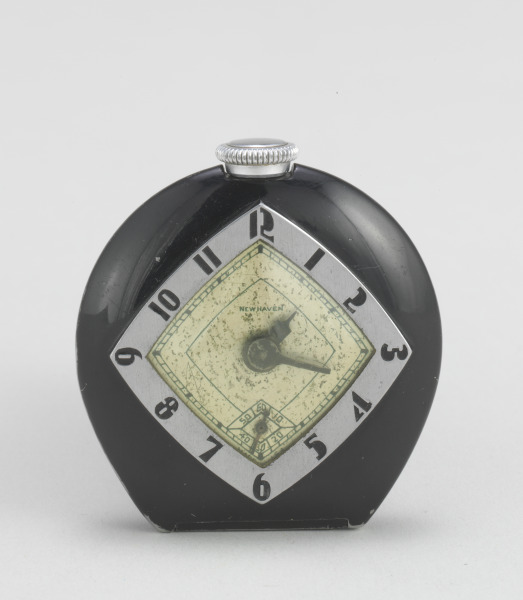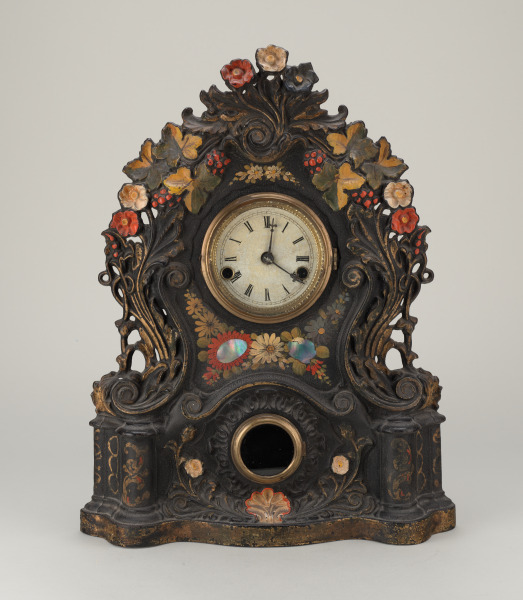







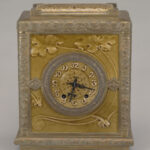
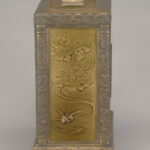
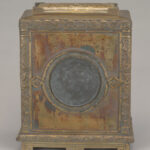

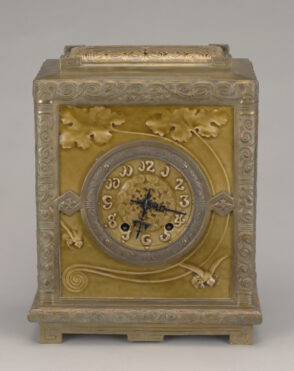
- Manufacturer: New Haven Clock Company
- Manufacturer: J. and J.G. Low Tile Works
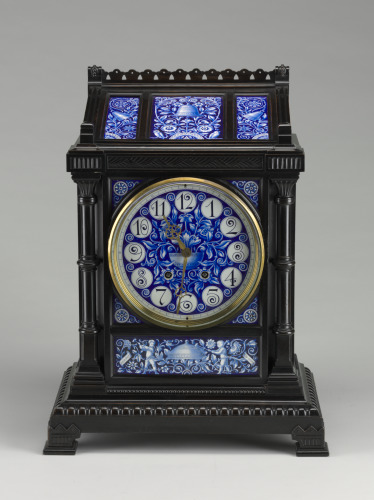
Mantel Clock
1878-1888
Physical Qualities
Glazed earthenware, brass, 12 x 9 3/4 x 6 in. (30.5 x 24.8 x 15.2 cm)
Credit Line
Purchase with exchange funds from Bequest of Charlotte B. Filbert, Baltimore, in Memory of Dr. Howard VanNatta
Object Number
1997.195
In the 1840s, a process called “dust-pressing” revolutionized the tile-making industry. Special machinery compressed nearly dry clay between two metal dies, ensuring uniform results. Dust-pressed tiles made at the Low Tile Works in Massachusetts were especially suitable for small domestic objects like this clock. The Japanesque patterns on the tiles reflect the transfer of the Aesthetic Movement from England to the United States. Commercially driven, this design reform movement touted art as a matter of uplifting beauty.
Manufacturer
New Haven Clock Company
1852–1955
New Haven, Connecticut 1853-1956
Meet New Haven Clock Company


Manufacturer
J. and J.G. Low Tile Works
1876–1906
Chelsea, Massachusetts 1877-1907
Meet J. and J.G. Low Tile Works
 On View at the BMA