




Gogodala
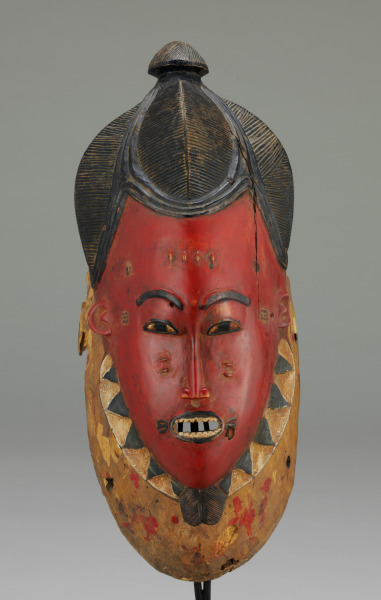
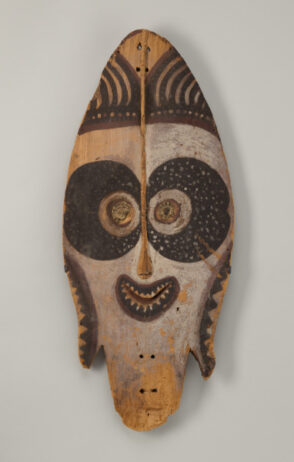
Mask component representing an ancestral male clan leader (kosa:ya)
Gogodala, 1919
Scroll

Gogodala
Mask component representing an ancestral male clan leader (kosa:ya)
Gogodala, 1919
Physical Qualities
Ukulu wood (alstonia spatulata), pigment, 27 1/4 x 11 x 2 3/16 in. (69.2 x 28 x 5.5 cm.)
Credit Line
Gift of Alan Wurtzburger
Object Number
1955.251.105
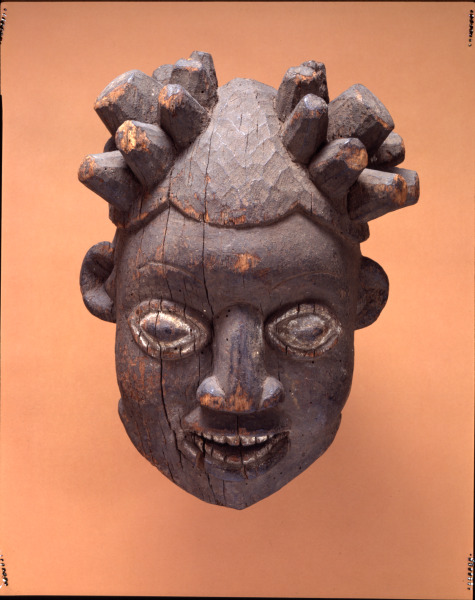
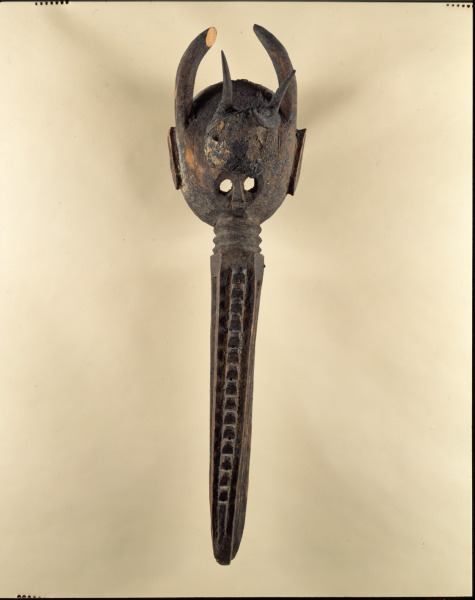
The artists who created the black-faced Mawa mask from Sabai Island [1955.251.100] and the white-faced Kosa:ya mask from the Aramia River region of Papua New Guinea were separated by 120 miles of land and water. Nevertheless, the works have much in common. Both represent ancestral male leaders. Both have relatively flat faces with pronounced noses. And both were worn by dancers during ceremonies celebrating the harvest. Native Papuans have always interacted with the islands that surround them, and these sustained exchanges have impacted every aspect of life, including the arts.
The Baltimore Museum of Art by gift, 1955; Alan Wurtzburger
"The Alan Wurtzburger Collection of Oceanic Art", January 7th-March 4th 1956, Baltimore Museum of Art
Kevin Tervala, "Oceanic Art Collection Installation" (December 12, 2021 - Indefinite)
Kevin Tervala, "Oceanic Art Collection Installation" (December 12, 2021 - Indefinite)
Douglas F. Fraser & Paul S. Wingret, "The Wurtzburger Collection of Oceanic Art" , BMA 1956 pg 32-33. ills. 105.
Kevin Tervala, "Oceanic Art at The Baltimore Museum of Art," Tribal Arts Magazine 104 (Summer 2022): 106-113. Illustrated on pg. 113.


 On View at the BMA