






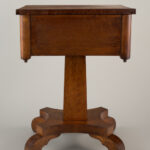

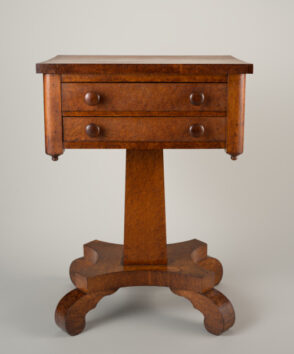
John Needles
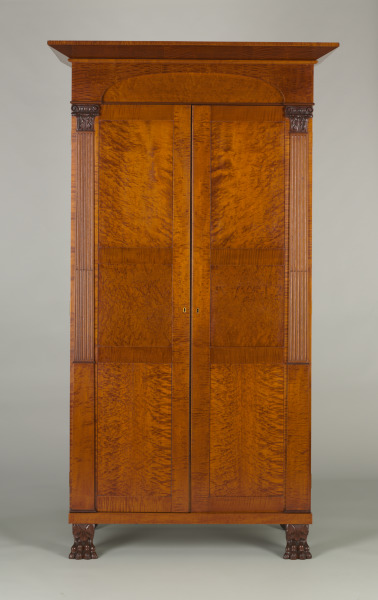
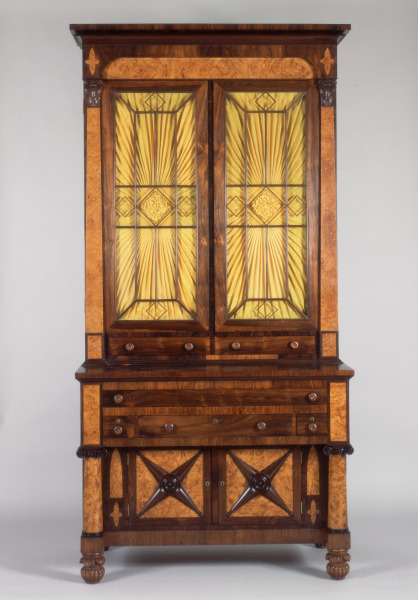
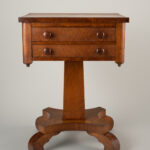
Sewing Table
1829
Physical Qualities
Bird's eye maple, metal, 28 3/4 x 16 1/2 x 21 in. (73 x 41.9 x 53.3 cm.)
Credit Line
Gift of Mrs. John O. Needles in Memory of Mrs. William A. Dixon
Object Number
1953.226.8
Frisby Blake (born c. 1800)
Frisby Blake was a Black man who worked as an indentured servant in the furniture factory of John Needles (1786–1878) before becoming an independent woodworker. Blake joined the factory in 1812 as an apprentice waiter. Needles, a staunch advocate for Black rights, employed many free, Black salespeople. Blake likely had several opportunities to speak with clerks selling furniture and would have known about the shop’s shipments to locations as far as South America. Had he stayed with the workshop through the 1820s, he may have heard Prudence Gardner, a teacher who held classes for African Americans after hours in the warehouse.
After completing his indentured contract, Blake left the factory and became one of the thousands of free, Black workers who called Baltimore home. His name appears in the 1830 census registered as a free person of color with a wife and three girls under the age of ten.
Homewood House Museum, Baltimore, "Needles and Threads: Women's Handiwork, Men's Craftmanship", September 6, 2001-November 25, 2001.


 On View at the BMA