




Urhobo
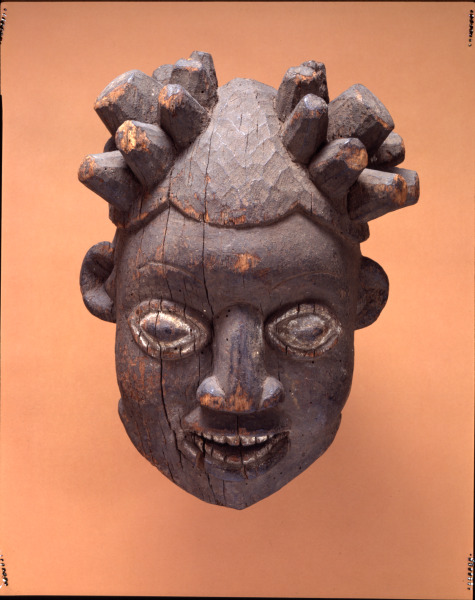
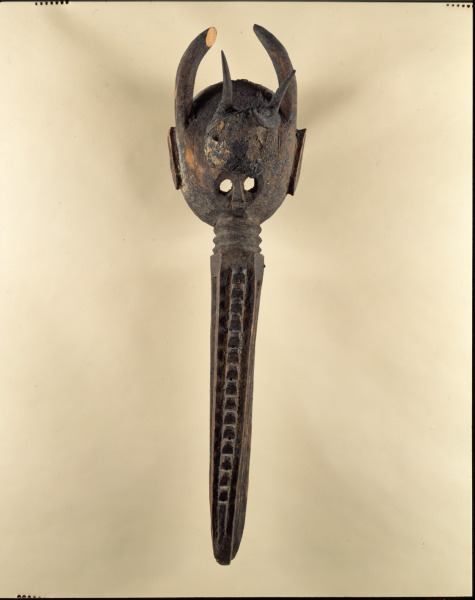
Mask Representing a Bride (Opha)
Urhobo, 1900-1932
Scroll

Urhobo
Mask Representing a Bride (Opha)
Urhobo, 1900-1932
Physical Qualities
Wood, camwood encrustation, white kaolin and blue indigo pigments, 20 1/16 × 7 3/16 × 6 in. (51 × 18.3 × 15.3 cm.)
Credit Line
Gift of Barry and Toby T. Hecht, Bethesda, Maryland
Object Number
1993.220
Young Urhoba women adorn their bodies with camwood, a natural red cosmetic, to indicate their passage through the sacred rites of passage into marriage. This mask, with its vivid countenance, evokes the beauty of a bride, or opha, whose body glows red. The mask’s visual association to a bride is reinforced by the presence of the two horns at its crown, which may evoke the hairstyle worn by Urhoba brides in the past. The vertical lines across its forehead mark the bride as Urhobo, and a pristine white costume would signal its status as a water spirit. While red camwood may have spoken to masculinity among Bullom and Pende communities, for Urhobo it signals the beauty of a nubile woman.
"Meditations on African Art: Color," April 18, 2007-August 19, 2007, BMA, Karen Milbourne.
Karen Milbourne, "Meditations on African Art: Color," Exhibition Brochure, April 18 - August 19, 2007, cover, ill.